The Threshold of Silence
Not because they do not care. Because no one ever taught them what comes next. You want to say the right thing. The words will not come, and silence starts to fill the gaps.
Rather start with a question than a commitment? Take the Presence Self-Assessment.
You do not need to be the light that erases the dark. You need to be the hand that holds, that stays, and that doesn't let go.
Presence is not a rare gift. It is a skill you can learn, and we can show you exactly how. Presence, not diagnosis. The people teaching you this once needed someone to do the same for them.
Lived, Then Tested
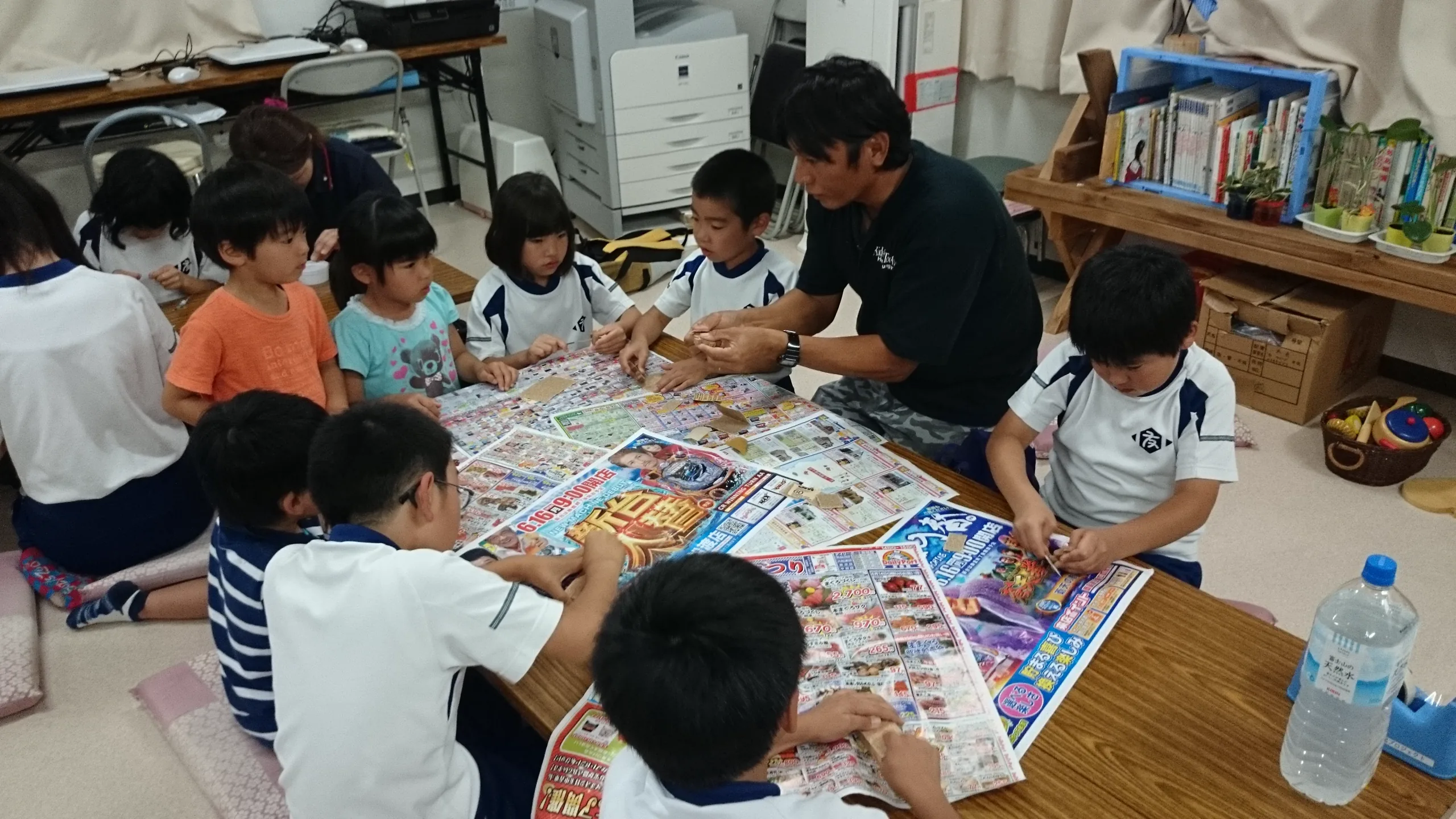
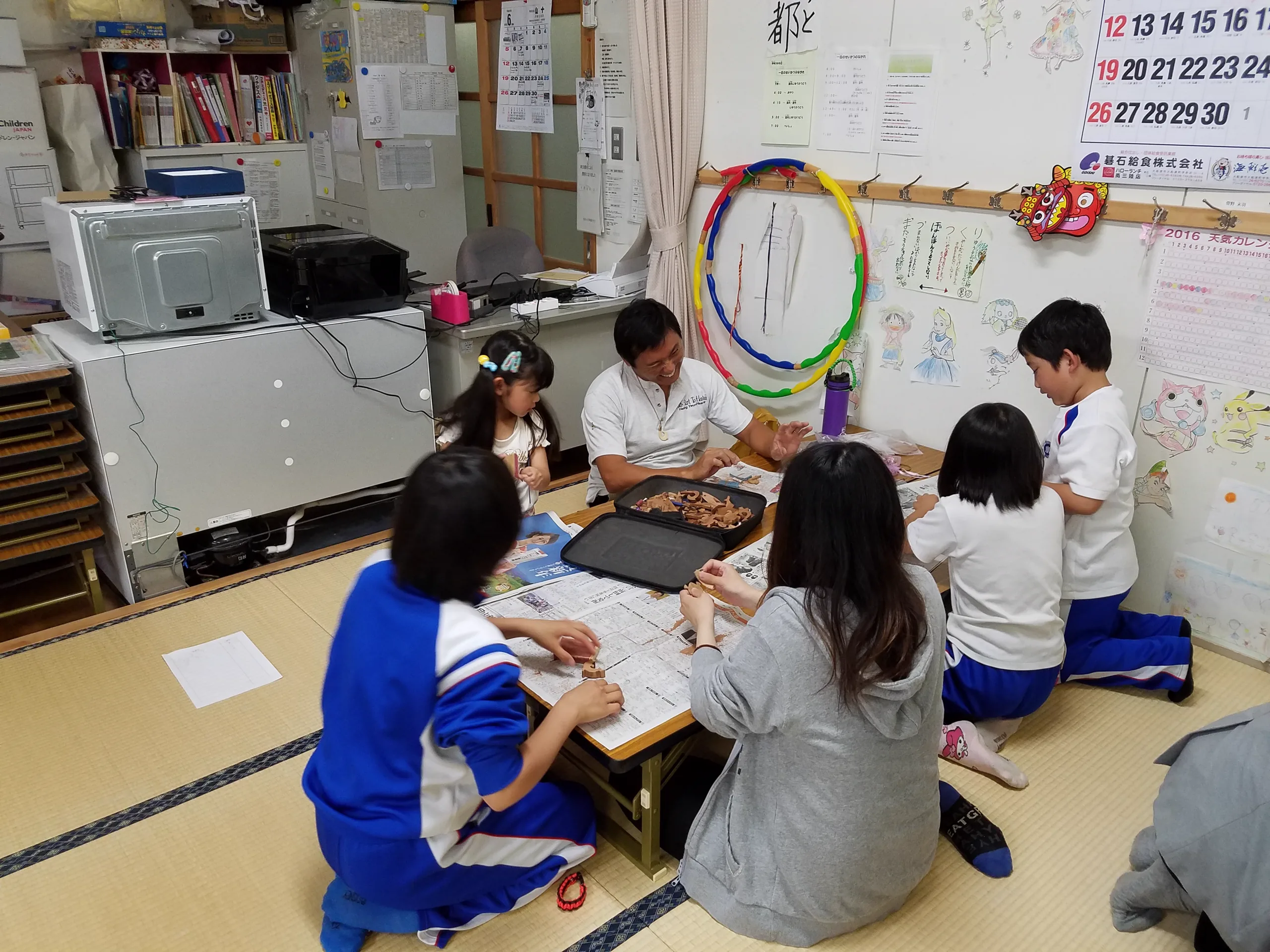
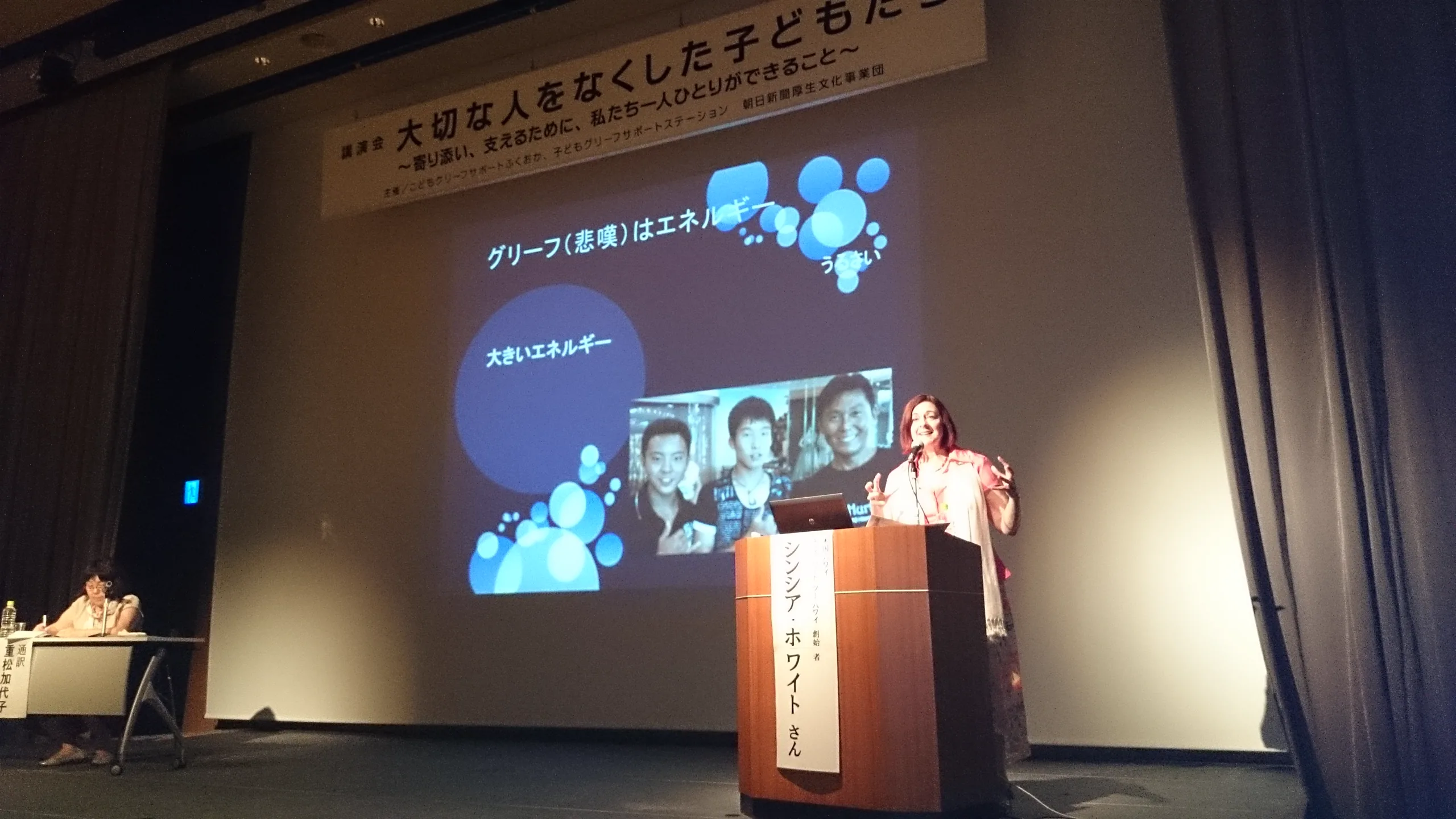
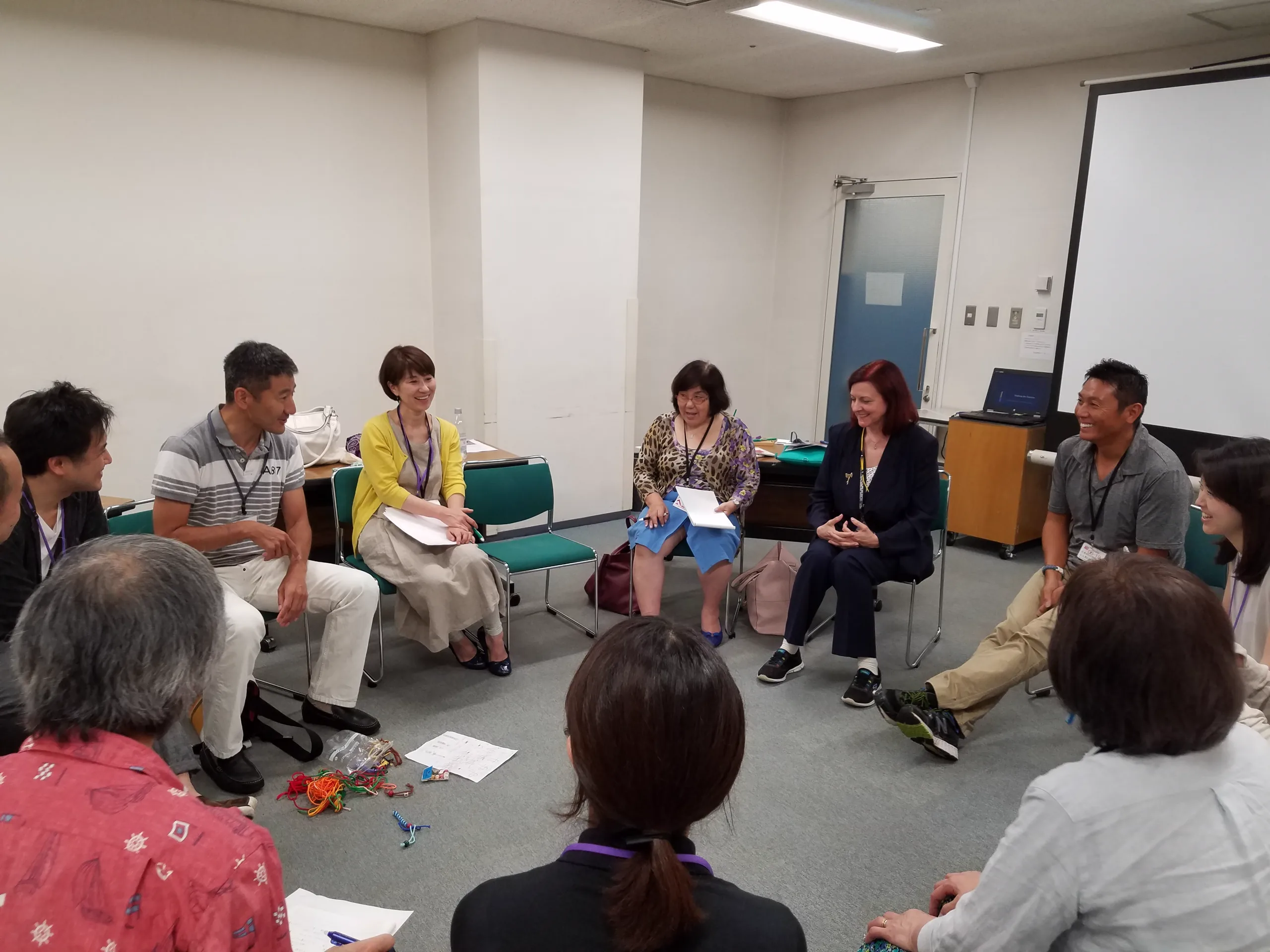
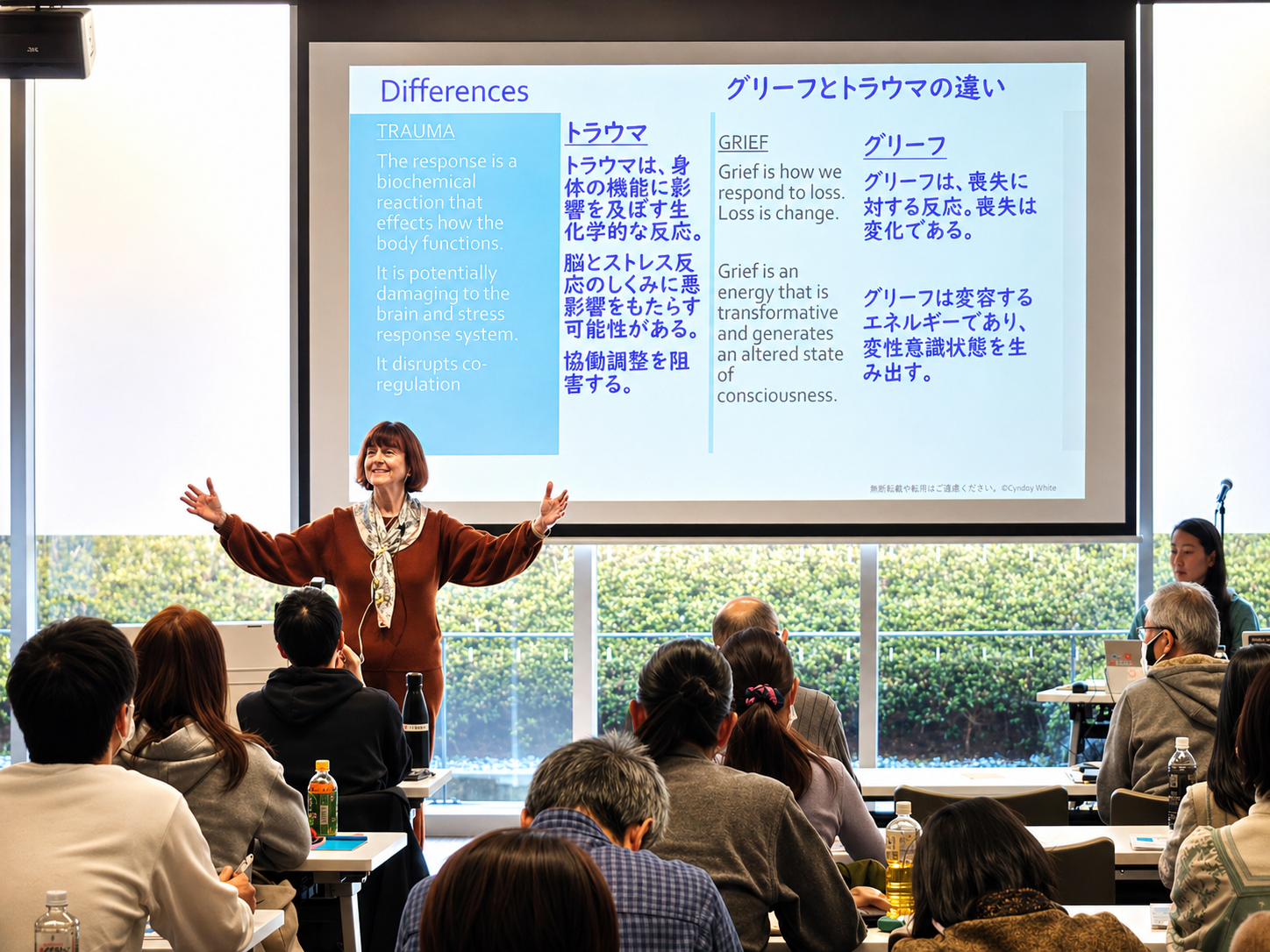
Cynthia White served seven years as Training Director at The Dougy Center, the national center for grieving children and families. She is an author and international trainer. Hiro and Cynthia co-founded Kids Hurt Too Hawaii and together received the FBI Director's Community Leadership Award for their work with grieving children. Cynthia presented at conferences in Kobe, Japan after the 1996 earthquake, and together, she and Hiro worked directly with families after the 2011 Tohoku tsunami and the Noto Earthquake, and provided services to children impacted by the Lahaina, Maui, fire disaster. Cynthia's research on children's grief was funded by the Japan Society for the Promotion of Science and appeared in the Japan Medical Society Journal.
Were you trained on the five stages of grief? Denial, anger, bargaining, depression, acceptance?
Cynthia studied directly under the woman who wrote them, Elisabeth Kübler-Ross. Even she never meant those stages to guide grief work with children. They were built to describe the process of dying, not the process of grieving.
An illness is diagnosed and managed. Energy is met, exactly as it shows up.
In GriefCynergy's own practitioner survey, only 7.4% of respondents said they had a clear, professional framework for supporting a grieving or traumatized child. Most are relying on instinct, not training.
Grief does not move in steps. It moves like energy, looking for somewhere to go.
Defiance. Movement. A raised voice.
The energy you were trained to correct.
Silence. Stillness. A child who will not meet your eyes.
The energy you were trained to worry about.
Both are the same thing, asking for the same response: an adult who knows how to meet it, not manage it.
Add trauma, and the energy becomes chaotic. How you regulate your own energy matters.
“We do not seek to change people. We create the conditions where remembering their authentic selves becomes possible.” Cynthia L. White
The Skill of Joining — Five Steps to Attunement
Presence is not abstract. It is the Skill of Joining: five specific, teachable actions, in order, that any trusted adult can practice under pressure. This is how you regulate the flow of energy.
Ground the moment in plain, judgment-free observation. "You are jumping. You are sitting quietly. You made a big circle with a yellow crayon."
Reflect the child's own words back to them, with the same tone, so presence becomes something they can feel, not just something you feel.
Meet big energy or small energy on its own terms, instead of steering it toward whatever is easier for you.
Follow their lead into their world of play, instead of redirecting them into yours.
Let them see a person, not a technique. This is what turns a trained adult into a trusted one.
“Presence without judgment is how you give unconditional love.” Cynthia L. White
Avenues of Application
When a student dies, your staff has 48 hours to get it right. We prepare your people to be present with grieving students before the crisis, and the moment it happens.
Every family that loses a child or parent remembers how your team showed up. We train your staff to hold that moment with steady presence.
Children are helped last and forgotten first. We train your responders to reach them fast, with presence instead of protocol.
Move from the fear of not knowing what to do for a child to the quiet confidence of knowing exactly how to be there.
Voices of Resounding Impact
"...it's not all about talking to a therapist, it's about having a safe place other than home for them to be themselves and not worry about being judged for being different."
"The aspect that stands out the most is the difference between big energy and small energy. Being able to recognize in each child what energy is actually occurring and meet that need."
"We learned from them that children don't have stigmas about suicide and to say the word 'suicide' while explaining what happened to her father. The best advice was to be honest and open with her, and just say it like it is, and don't avoid talking about it."
"I have spent numerous hours, side-by-side with Hiro Ito during direct interactions with children suffering from loss and trauma. He is a master at eliciting children's trust and admiration."
"I can say that having the opportunity to train with Cynthia and Hiro has helped me process my own grief and utilize these skills in the outside world."
Two Childhood Wounds, One Proven Blueprint
At six years old, Cynthia stepped off a sidewalk, and for a moment, the world went still. The sound gone. The birds silent. A presence stopped her in place and left her with a message that would shape the rest of her life: everything that happens is right.
Soon after, her father drove her mother away and left his children behind. Cynthia moved through a series of foster homes. Three of them were abusive.
It was the fourth home, with a family named Riggs, where she felt unconditional love for the first time. No lectures, no techniques, just a family that showed up, fully, for her life. That love was steady enough to pull her back into herself, and she has spent the 45 years teaching adults how to give a child what the Riggs family gave her.
Hiro's story runs a parallel path. He lost his mother before he turned three. A Catholic monastery took him in first, and for a while, he knew that same kind of love. Then he was moved to a second orphanage in Japan, where the abuse he survived was severe enough that parts of his own childhood are simply gone.
He carried that loss quietly into adulthood, until he trained under Cynthia and recognized, in his own body, what he had been silently suffering all along.
Neither of them started with a theory. Both started with a wound, and with someone who showed up. That is the origin of everything GriefCynergy now teaches.
“GriefCynergy is about how you show up for children; not what you do.” Cynthia L. White
The Joining Circle
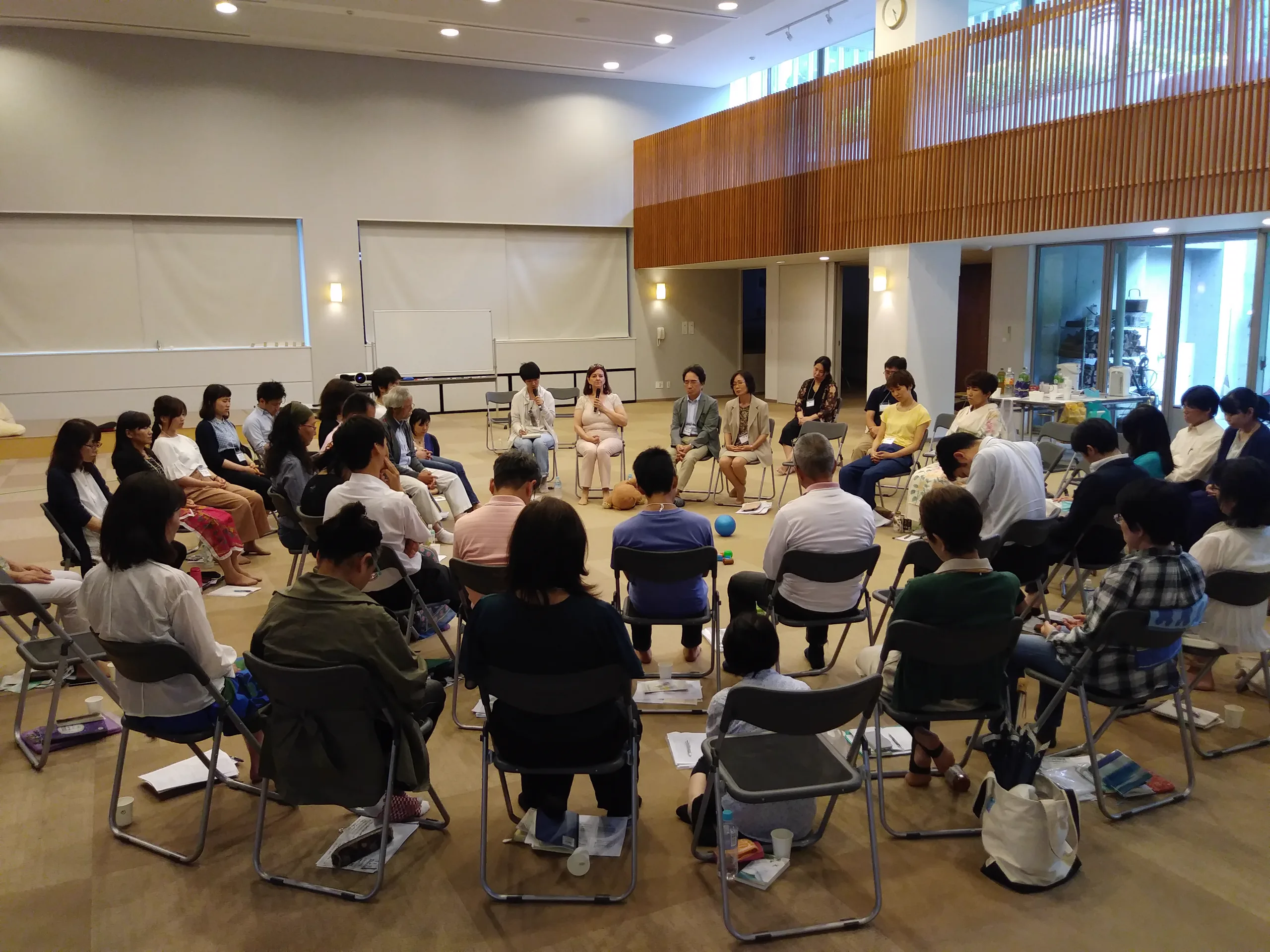
This is not a course to finish and move on from. It is where hearts gather to keep practicing, together, so presence never has to be carried alone.
The Joining Circle is where that continues. Twenty live sessions each year, ninety minutes each. Ten are training and open questions. Ten are support, where you bring what actually happened this week and work through it together.
This is the movement: members are welcome from all over the globe, carrying one shared conviction, no child should carry grief or trauma alone, and neither should the adults who show up for them.
Explore the Joining CircleDismantling the Caregiver's Silent Objections
“Healing only happens in relationships of equality.” Terry Real
This training is not for you if you want a clinical shortcut, a script that removes all uncertainty, or a certificate that does not change how you actually show up for a child.
It is for you if you are ready to trade the freeze for something you can practice, and get better at, one child at a time.
Both. The five components of Joining are grounded in attachment theory, post-traumatic growth theory, and polyvagal theory. A child's nervous system registers whether an adult is regulated before a single word is spoken. And growth after trauma is not the same as recovery or positive thinking. It does not erase what happened. It grows alongside it, and only when a trusted adult stays close enough for that to happen.
The introductory webinar is free. Organizational training is shaped to the size of your team and the setting you work in, whether that is a school, a hospital, or a disaster response unit. Book a conversation, and we will build a plan that fits.
No. Joining was built for trusted adults first: teachers, foster parents, volunteers, and clergy, not only therapists and social workers. If you are the adult a child turns to, this training is built for you.
The First Step — Turning Fear Into Presence
A free 90-minute webinar. Register, and you will leave knowing:
Free. No clinical background required. The supporting documents go straight to your inbox.
Register for the Free WebinarThe Riverbed Manifesto
“Grief is the energy of transformation. It is how you change. Trauma is the body's response to threat. It is how you survive.”
A dam holds grief or trauma back until it breaks. A riverbed simply gives it a shape to move through, safely, at its own pace. That is the work. Not stopping what a child feels, but building the safe banks that let it flow.
Toward a world where no child carries grief or trauma alone.